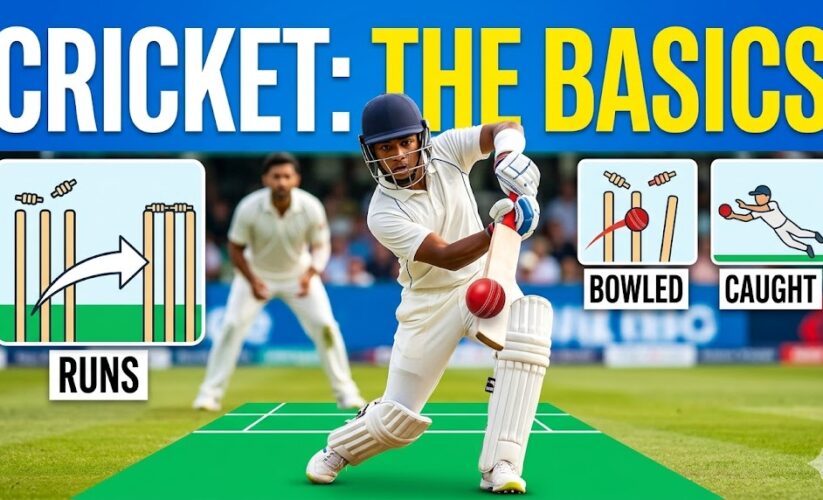
Getting to Know the Basics of Cricket Rules: A Guide for Beginners

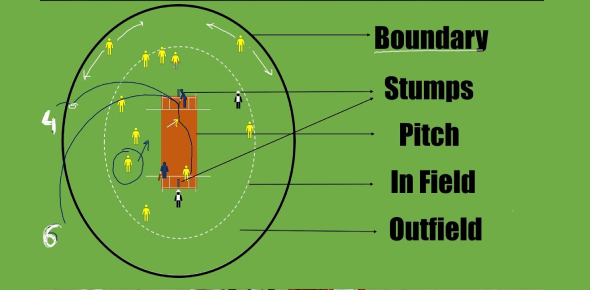
Cricket is a fast-paced bat-and-ball sport. Played between two teams of 11 players each, the match takes place on a large oval or circular grass field. The main action happens in the center of the field on a 22-yard rectangular area known as the pitch. The primary objective is simple: the team that scores the most runs wins.
According to the official Laws of Cricket, the game is played in three primary international formats:
- Test matches: The traditional format played over five days, with each side having two innings.
- One Day Internationals (ODIs): A limited-overs format where each squad has a set limit of 50 overs.
- T20s (Twenty20s): A high-intensity, fast-paced format with exactly 20 overs for each side.
Every match begins with a coin toss. The captain who wins the toss decides whether to bat or bowl first. This choice is crucial and can deeply impact the game’s outcome, especially in Tests and T20s, as weather and pitch conditions are key factors that shape the match.
How Runs Are Scored and Matches Are Won
The batters aim to score the maximum number of runs, while the fielding team attempts to limit their scoring and dismiss them. Several run-scoring methods exist within the rules:
- Running: Dashing between the wickets after a successful ball strike.
- Boundaries: If the ball touches the ground and rolls past the boundary rope, the team earns four runs. If it sails completely over the boundary rope without bouncing, six runs are awarded.
- Extras: Umpires award bonus runs for illegal bowling actions. This includes wides, no-balls, and leg-byes (if the ball hits the batter’s body without touching the bat).
The side holding the highest run total at the end of the match comes out victorious. This occurs either when both innings end or when the bowlers have delivered their maximum allotted overs. If a limited-overs match ends in a tie, it goes to a Super Over—a high-pressure tiebreaker where both teams get to bat for a single over, and the team with the most runs wins.
Key Elements of the Game to Know
To fully enjoy and understand the sport, supporters and participants must know these basic mechanics:
- Wickets: The methods used to dismiss batters. The most common are bowled, caught, LBW (Leg Before Wicket), and run-out.
- Overs: A set of six legal deliveries bowled by a single bowler. Teams have 50 overs in ODIs and 20 overs in T20s.
- Bowling: The ball must be delivered with a straight arm using an overarm action. “Wides” (bowled beyond the reach of the batter) and “no-balls” (illegal deliveries, such as overstepping the crease) penalize the bowling team with extra runs.
- Free Hit: Following a no-ball for overstepping, the next delivery is a “free hit.” During this ball, the batter cannot be dismissed by the usual means (apart from a run-out) and can swing freely.
- Powerplay: In limited-overs cricket, strict fielding restrictions are enforced during the first few overs. This encourages bold, aggressive batting early in the game.
Equipment and Fielding Regulations

Cricket requires specific gear and a strict field setup to keep the game fair. Each item follows exact measurements to meet the International Cricket Council (ICC) standards:
- The Bat: A flat-faced wooden bat, maximum 38 inches long.
- The Ball: A leather-bound cork ball, weighing between 5.5 and 5.75 ounces.
- The Wicket: Comprises three upright wooden stumps and two small bails that sit resting on top.
It is the fielding team’s job to prevent the batting squad from scoring points and to take wickets. Regulations, like Powerplays, dictate exactly how many players are allowed outside the 22-yard inner circle at different stages of the game. Fairness is strictly monitored; behaviors such as ball tampering or deliberately obstructing the field are major offenses punishable by severe match penalties.
Advanced Rules and Match Interruptions
Aside from the fundamentals, there are numerous subtle regulations that enrich the game’s complexity:
- LBW (Leg Before Wicket): A batter is out if the umpire determines the ball was on track to hit the stumps, but was illegally blocked by the batter’s leg or body.
- Bouncers & Beamers: A “bouncer” is a ball pitched short to bounce high toward the batter’s upper body (granted in strict moderation). A “beamer” is a dangerous, illegal delivery that reaches the batter above waist level without bouncing.
- Follow-On Rule: Used only in Test matches. If the team batting second scores significantly fewer runs than the first team, the leading team can force them to bat their second innings immediately.
- Duckworth-Lewis-Stern (DLS) Method: A complex mathematical calculation used to reset targets in limited-overs games impacted by rain, factoring in both wickets lost and overs remaining.
- Run-Outs: When the fielding team knocks the bails off the stumps using the ball while the batters are attempting to complete a run and are caught outside their safe zone (the crease).
The Takeaway
Cricket perfectly combines athletic skill, deep tactical planning, and precision accuracy. It challenges everyone to learn its unique flow, from how runs are scored to complex fielding strategies and equipment regulations. Whether you are new to cricket or already have some foundational knowledge, mastering these basic rules is your first step to truly appreciating the gentleman’s game.
Also Read : Gary Kirsten Appointed Sri Lanka Men’s Head Coach: A New Era Begins