
How to Bowl Fast: The Complete Speed Guide

Bowling fast requires a combination of proper footwork, explosive timing, increased backswing height, and powerful release mechanics. Fast bowling in ten-pin bowling typically means ball speeds of 17-22 mph, achieved through coordinated leg drive, arm speed, and momentum transfer from the approach to the release.
Mastering fast bowling techniques helps bowlers achieve better pin carry, an increased strike percentage, and more powerful ball reactions that can overcome challenging lane conditions.
Understanding Bowling Ball Speed
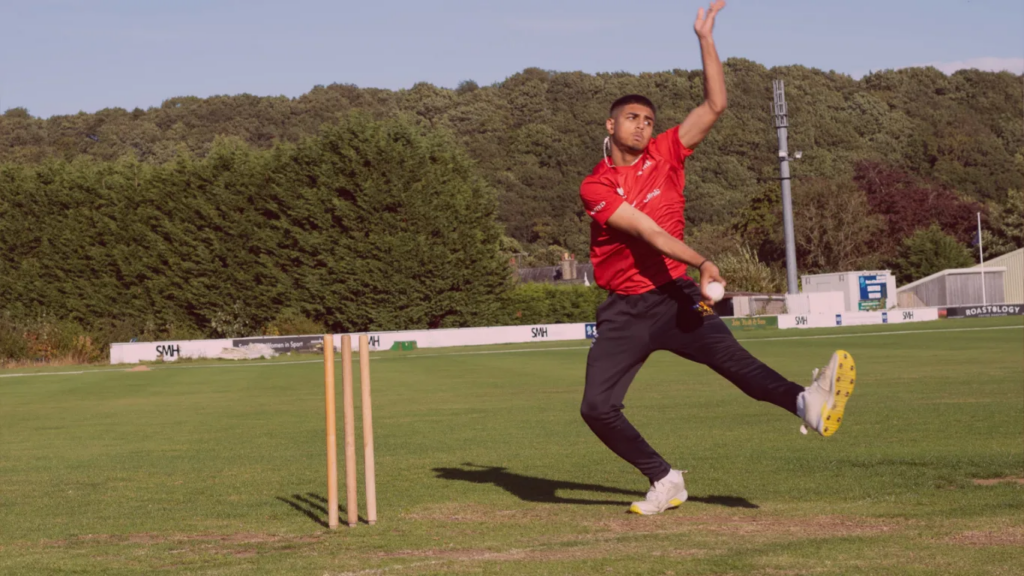
Ball speed represents how fast your ball travels from the release point to the pins, measured in miles per hour (mph) by modern scoring systems. Faster ball speeds create more powerful pin action by transferring greater kinetic energy upon impact. When a ball enters the pocket at 19 mph instead of 15 mph, pins scatter more violently and carry back to the remaining pins with greater force.
However, excessive speed can reduce controllability and cause the ball to deflect off the headpin rather than driving through the pocket effectively. Professional bowlers constantly adjust their speed based on lane conditions.
| Bowler Category | Average Speed Range | Characteristics |
| Youth/Beginner | 8-12 mph | Learning fundamentals, accuracy over speed |
| Recreational | 12-16 mph | Casual play, developing consistency |
| Competitive League | 16-18 mph | Regular practice, refined technique |
| Professional (PBA) | 18-22+ mph | Elite athletes, perfect mechanics |
Proper Bowling Approach for Maximum Speed
The approach provides the foundation for generating ball speed through momentum transfer and coordinated movement. Most bowlers use either a four-step or five-step approach, with the five-step generally producing more ball speed through increased momentum buildup.
Each step in the approach should progressively increase speed, building momentum that transfers into ball velocity at release:
- Start with a controlled first step.
- Gradually accelerate through the middle steps.
- Explode through the final slide step.
This progressive acceleration creates a smooth momentum transfer rather than jerky movements that disrupt timing. The final step involves a powerful slide motion where the lead foot slides toward the foul line while the trail leg extends backward for balance, allowing continued forward momentum while stabilizing the upper body for an accurate release.
Increasing Backswing Height
Backswing height directly correlates with ball speed because a higher backswing creates more distance for gravity to accelerate the ball during the downswing.
Professional bowlers demonstrate backswing heights ranging from mid-torso to well above shoulder level. Players often wearing high-performance gear from brands like Motiv and Storm experiment with backswing height adjustments to optimize their speed-accuracy balance. Increase your backswing height gradually over weeks or months rather than attempting dramatic changes immediately. Start by raising your backswing 2-3 inches and practice until this new height feels natural and maintains proper timing.
Developing Explosive Arm Speed and Release

Modern power bowling incorporates active downswing acceleration where bowlers consciously increase arm speed during the forward swing, particularly in the final portion before release.
Fast bowling requires full-body coordination:
- The legs drive forward momentum.
- The core maintains stability and transfers energy.
- The shoulders rotate to enhance arm speed.
This kinetic chain starts from the ground and flows upward through your body, culminating in maximum hand speed at release. Optimal release timing for fast bowling occurs at the bottom of your swing arc or slightly forward, allowing you to transfer maximum momentum while maintaining leverage. Equipment from heavy-hitting brands like Hammer often pairs well with this coordinated power generation.
| Speed Generation Component | Speed Contribution | Development Method |
| Leg drive/momentum | 3-5 mph | Footwork drills, approach speed |
| Backswing height | 2-4 mph | Progressive height increase |
| Active arm acceleration | 2-3 mph | Downswing speed drills |
| Release timing | 1-2 mph | Release drills, video analysis |
Strength Training for Fast Bowling
Physical conditioning significantly impacts bowling speed potential:
- Upper Body: Exercises like shoulder presses, lateral raises, and rows build the musculature necessary for controlling heavy bowling balls through extended swing arcs.
- Core: Planks and rotational exercises provide the foundation for transferring leg drive energy through your torso to your arm, preventing energy leakage.
- Lower Body: Squats, lunges, and plyometric exercises develop the power needed for explosive approaches and strong slides.
Equipment Selection for Maximum Speed
Equipment choices significantly impact achievable ball speed.
- Weight: Most adult male bowlers find 15-16 pounds optimal for combining speed with pin carry. Lighter balls (13-14 pounds) allow higher speeds but carry less momentum into the pins.
- Surface: Highly polished balls encounter less friction with the lane surface, maintaining speed longer as they travel toward the pins. Aggressive surface preparations create more friction, slowing the ball more quickly.
- Layout: Pin-down drilling layouts generally allow balls to maintain more speed through the pins compared to pin-up layouts. Working with pro shop operators familiar with Brunswick or 900 Global layouts can help maximize your velocity retention.
Common Mistakes to Avoid
- Muscling the Ball: Trying to throw harder by tensing muscles disrupts timing, reduces accuracy, and often decreases actual ball speed. Focus on staying loose and relaxed.
- Ignoring Accuracy: Missing the pocket by three boards at 20 mph produces worse results than hitting the pocket consistently at 17 mph.
- Poor Timing: If your footwork arrives at the foul line before your armswing reaches the release position, you can’t effectively transfer momentum into ball speed. Perfect timing synchronizes your slide foot arrival with your arm reaching the bottom of the swing.
Balancing Speed with Control and Rev Rate
Ball speed and rev rate (revolutions per minute) work together to determine ball motion characteristics. Most competitive bowlers target speed-to-rev ratios between 0.9 and 1.1, balancing sufficient hook potential with controllable motion.
Fresh oil patterns require higher speeds to prevent excessive hook, while broken-down patterns need more revs or reduced speed to generate sufficient ball motion. Throwing 17 mph on corner pin spares provides better accuracy than 20 mph attempts, while first-ball strikes might demand maximum speed for optimal carry.
Conclusion
Learning how to bowl fast requires the systematic development of proper footwork mechanics, increased backswing height, explosive arm acceleration, and optimized release timing. Success in fast bowling balances raw speed with maintained accuracy and appropriate rev rates, recognizing that controlled velocity produces better results than unmanaged power.
By progressively developing speed through focused practice drills, avoiding common mistakes like muscling the ball, and building the physical conditioning to support high-speed bowling, players at all levels can increase their velocity while maintaining scoring consistency.
Also Read : Warner: ‘I had Lord’s penciled in as my last Test’