
In the opening Test of the five-match series between India and England at Headingley, Leeds, Shubman Gill’s men suffered a crushing defeat that exposed several cracks in their approach. Despite piling up more than 800 runs across two innings, India’s bowlers couldn’t defend a sizeable target, and the fielders repeatedly let England off the hook.
India began strongly, posting 471 in the first innings. England replied with 465, trailing by just six runs. In the second innings, India added 364 to set England a stiff target of 371. Yet, England chased it down comfortably in 82 overs on the final day, losing only five wickets. Here are the five major reasons behind India’s defeat:

Collapse of India’s Lower Order
India’s lower-order batting proved to be a glaring weakness. In the first innings, the last seven wickets tumbled for just 41 runs. The second innings saw an even steeper decline, with six wickets falling for 31 runs. Captain Shubman Gill himself admitted that the inability of the tailenders to contribute runs was a decisive factor in the match slipping away.
Average Bowling Display
Barring Jasprit Bumrah’s first-innings five-wicket haul (5/83), India’s bowling attack looked ordinary. Bumrah couldn’t pick up a wicket in the second innings, while Mohammed Siraj, Prasidh Krishna, and Shardul Thakur struggled for consistency. Siraj claimed two wickets early on but went wicketless later. Prasidh Krishna’s raw pace came at a high cost—he conceded 128 runs in 20 overs at an economy of 6.4 in the first innings, and over 90 runs in the second. Shardul Thakur’s bowling offered little respite, as he remained expensive despite taking two wickets in the fourth innings.
Shardul Thakur’s Underwhelming All-Round Show
Shardul was preferred over the young all-rounder Nitish Kumar Reddy, but the move backfired. Thakur contributed just 1 and 4 with the bat, falling cheaply in both innings. With the ball, he failed to make any impact in the first innings—conceding 38 runs in six overs without a wicket—and though he took two wickets later, he still went at over five runs per over.
Sloppy Fielding Costly Catches
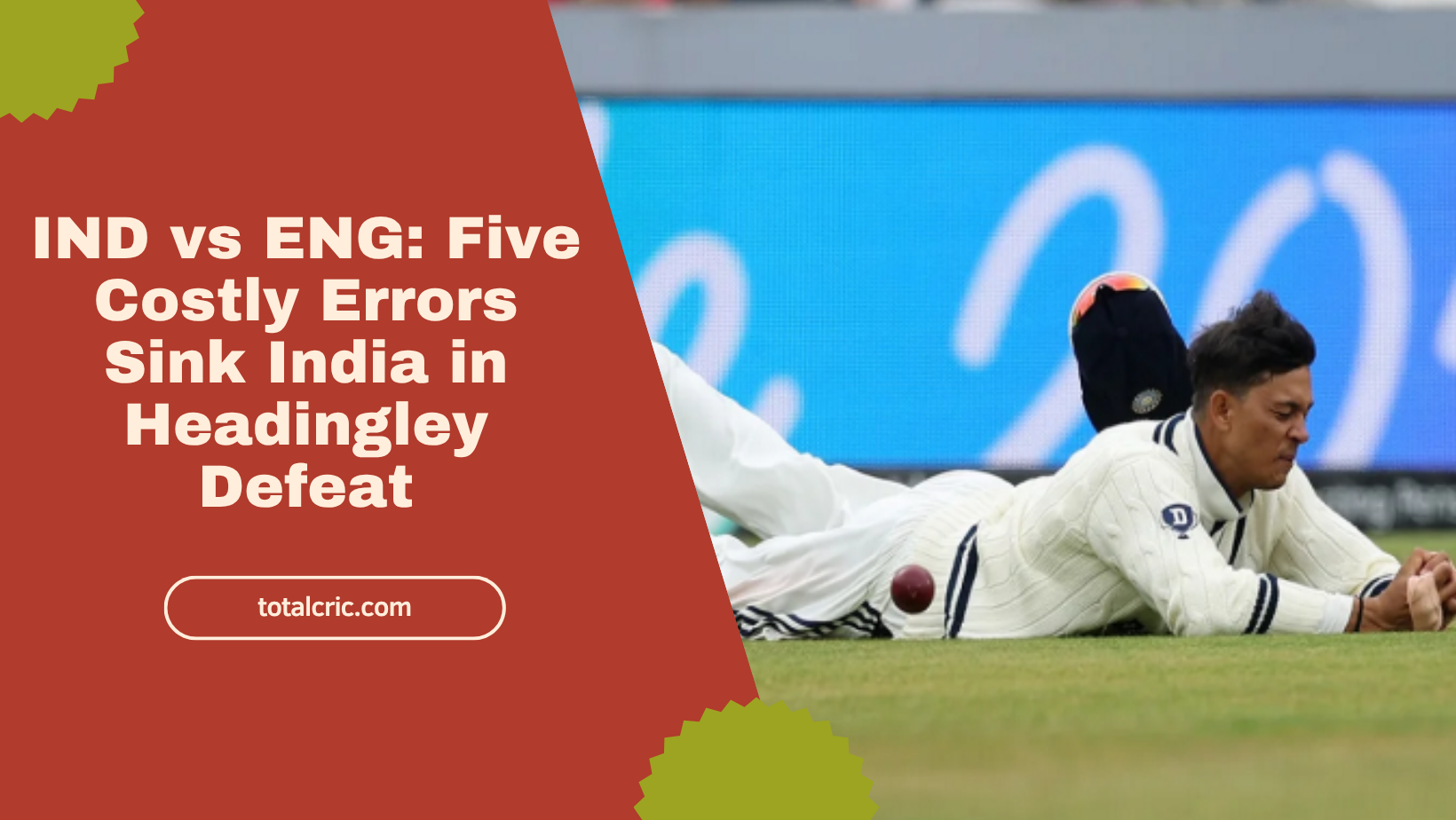
Fielding was another area where India let themselves down badly. The team dropped seven catches, their worst effort since 2019. Yashasvi Jaiswal had a particularly rough outing, grassing four chances—three off Bumrah and one off Siraj. One of those dropped chances allowed Ben Duckett to go on and score a century that effectively sealed England’s win.
Questions Over Shubman Gill’s Captaincy
Shubman Gill, captaining a Test for the first time, found his decisions under scrutiny. He persisted with Yashasvi in the slip cordon despite repeated errors, even though Sai Sudharsan is regarded as a safer pair of hands there. Yashasvi had primarily fielded in the gully in Australia, making his slip placement questionable. Gill’s timing of bowling changes was also puzzling. In England’s first innings, after they had lost eight wickets, he delayed bringing Bumrah back into the attack. When Bumrah finally returned, he quickly cleaned up the tail, but by then England had erased India’s lead. Similarly, Shardul Thakur, who can be more effective with the new ball, was introduced only in the 40th over, limiting his impact.
Also Read : Gautam Gambhir Responds After India’s First Test Defeat to England